Resume examples by job and field
Each example is a complete resume for one job, written at the level you are applying for: a first role, a mid-career move or a senior post. Read the summary, bullets and skills, see why the design suits the field, then open the example in the editor and replace the details with your own.
Example resumes
See all designs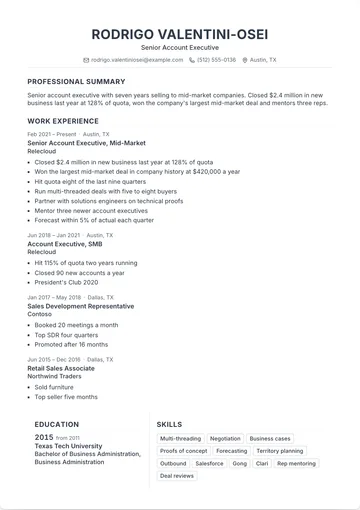
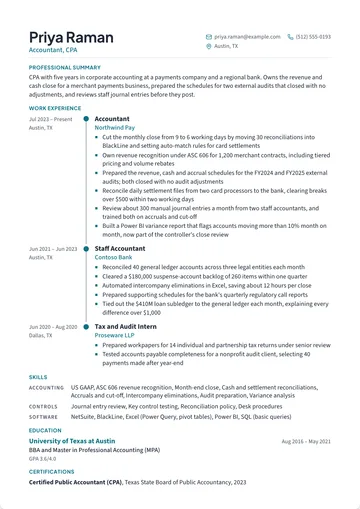
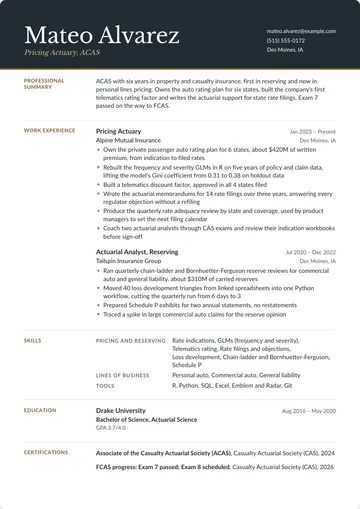
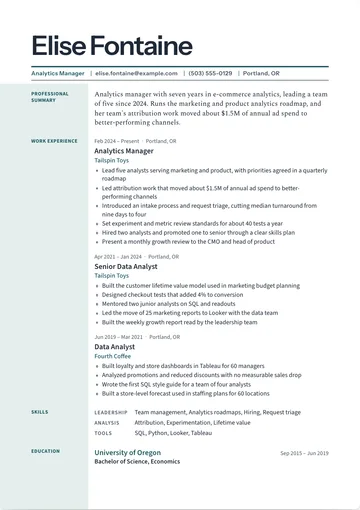
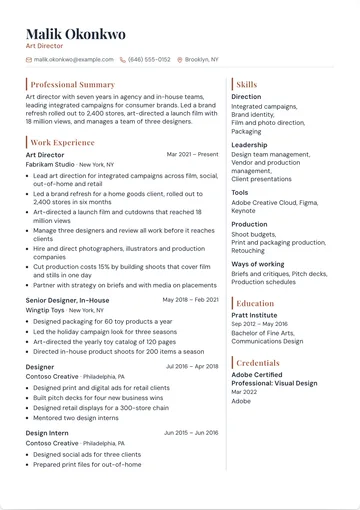
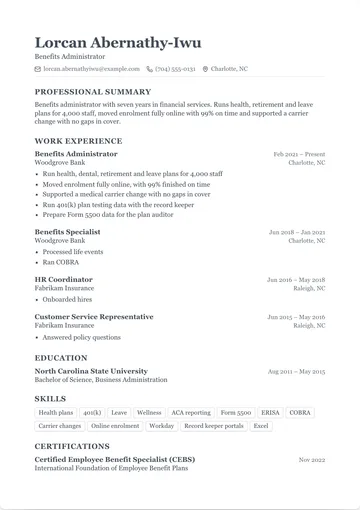
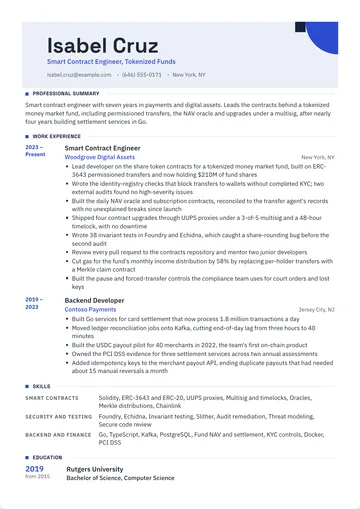
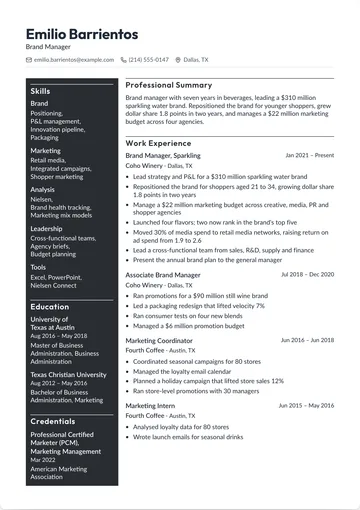
Browse by field
Technology & Data
25 examples
All 25 examplesFinance & Accounting
20 examples
All 20 examplesHealthcare
19 examples
All 19 examplesSales, Service & Real Estate
8 examples
- Account Executive
- Business Development Manager
- Customer Service Representative
- Customer Success Manager
Marketing, Creative & Media
25 examples
All 25 examplesBusiness & Project Management
8 examples
All 8 examplesEducation & Research
9 examples
All 9 examplesEngineering, Manufacturing & Trades
12 examples
All 12 examplesArchitecture & Construction
4 examples
See all examplesHospitality & Retail
9 examples
All 9 examplesLegal, Government & Nonprofit
5 examples
All 5 examplesHR & Operations
12 examples
All 12 examplesStudents & Entry Level
Examples coming soon
Resume examples for every experience level
Most role pages show the same job at several stages, such as a new graduate, an experienced specialist and a team lead. The early example leans on education, training and projects. The later ones lead with results, scope and the people you managed.
Pick the example closest to the job you want next, not the one you have now. Its summary and bullets show what a hiring manager expects to see at that level.
What a good resume example shows
A useful example matches your job and your level. It has a two or three line summary, bullets that name results with numbers or scale, and a skills section that uses the words found in real job adverts for that role.
It also shows the details people get wrong: how to list a license or certification, where education goes, and how long the resume should be. Each role page covers these for its own field.
How to use a resume example without copying it
Use an example for its structure and its level of detail, then write about your own work. Keep the order of the sections, swap every bullet for something you did, and replace each number with your real figure.
Recruiters see the same sample lines many times, so a copied bullet stands out. If a bullet does not fit your job, drop it rather than bending your experience to match it.
Resume examples vs resume templates
A resume example is filled in: it shows what to write for a particular job. A resume template is the design: the layout, type and colours the words sit in.
Every example here is already set in a template, and you can switch the design in the editor without retyping anything.
Browse resume templatesResume example questions
What are good examples of a resume?
A good resume example matches your job and your level. It has a short summary, bullets that name results such as numbers, scale and outcomes, and a skills section that uses the words in real job adverts. Pick the role closest to yours, then change every detail so it describes your own work.
How do I write a simple resume?
Use one column, plain section headings (Summary, Experience, Education, Skills) and your most recent job first. Give each job three to five bullets that start with what you did and end with the result. One page is enough for most people with under ten years of experience.
What do resumes look like in 2026?
Clean and easy to scan. Most use one or two columns, a readable sans-serif or serif font, a short summary at the top, and results-led bullets. Photos are left off in the US, UK, Canada and Australia. The file is usually a PDF that hiring software can read as text.
Which resume format is best?
The reverse chronological format, with your latest job first, suits almost everyone and is what recruiters expect. A skills-first layout can help career changers, but keep a dated work history so the reader can follow it.
Can I use a resume sample for my first job?
Yes. Start from the entry-level example on the role page closest to the job you want. Put education, training, projects and part-time or volunteer work where experience would go, and describe what you did in each with a result where you have one.