What employers in this field look for
By Gaurav Sharma. Updated .
Owners and managers in this field read for numbers. Put them where a quick reader finds them.
- Size
- Covers, rooms, sales, stores or bookings a year.
- The numbers that matter
- Food cost, labour, RevPAR, conversion, shrink, sell-through, guest scores.
- People
- Staff you lead, hire and keep. Turnover is a big one.
- Systems
- Toast, Opera, Shopify, Sabre or the retail system in the post.
- Level
- Shifts, departments, stores or properties you run, and the team you lead. Give it in your summary line, next to your title.
Certifications, training and degrees
Most of these roles need no licence. Some states and cities require food service managers to hold food safety certification, and full-service hotels may prefer managers with a hospitality degree. List what you hold with the issuer and year.
- ServSafe ManagerNational Restaurant AssociationChefs and restaurant managers
- ACF certification (CC to CEC)American Culinary FederationChefs, especially in hotels, clubs and institutions
- Hotel certifications, such as the CHAAHLEIHotel general managers (CHA); AHLEI also certifies front desk staff
- Certified Travel Associate (CTA)The Travel InstituteTravel agents
- Bachelor's in hospitality or hotel managementYour collegeHotel managers at full-service hotels; multi-unit restaurant roles
- Platform and ad certificatesGoogle, Meta and platform vendorsEcommerce managers
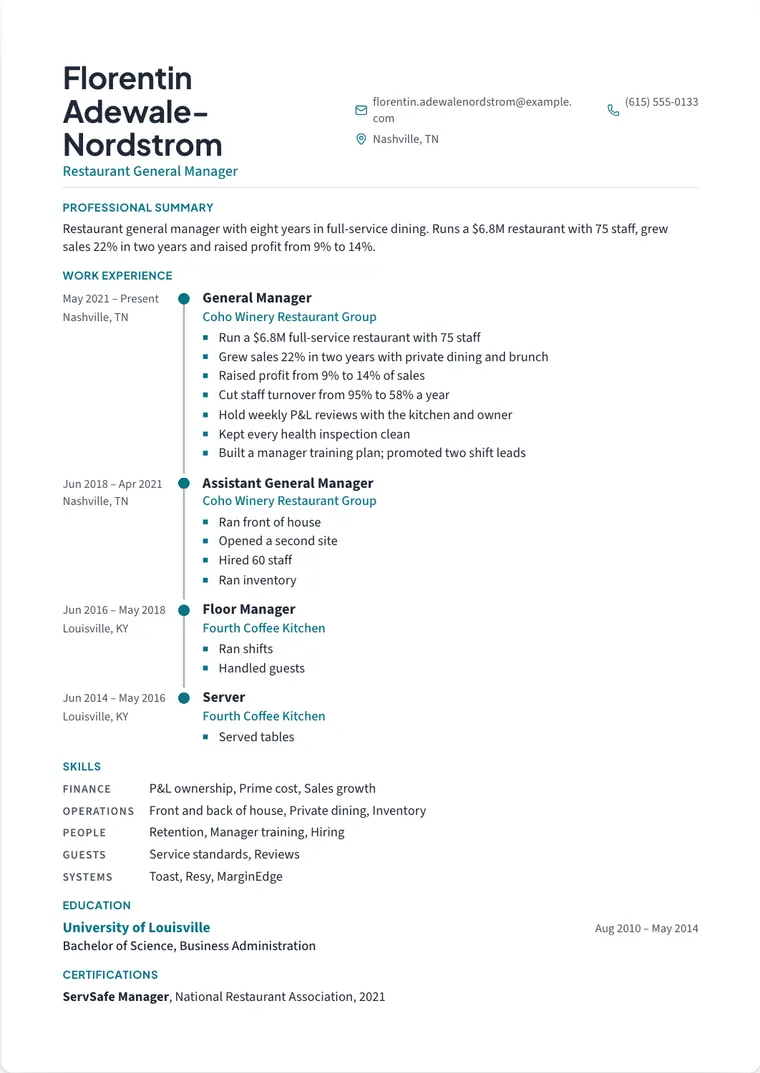
Samples shown in Milestone, the design you picked
How it looks on the page
The restaurant manager example's certifications, laid out on the page.
Skills shared across these roles
Start here, then add the role-specific skills from its own page. List skills plainly, with no ratings.
- Guests and customers
- Service recovery, Guest scores, Upsells, Loyalty
- Money
- P&L, Food or labour cost, Shrink, Margin
- People
- Hiring, Training, Scheduling, Retention
- Systems
- Toast, Opera, Shopify, Excel
Questions
Which example should I start from?
The title closest to the job post, at your experience level. If you're applying one level up, start from that level and keep your real titles. Then swap in your own numbers: covers, rooms, store sales, conversion or bookings, each with the size of the business.
Should I share sales figures?
Yes, as a total or range, with seats, rooms or staff, such as "$4 million, 220 seats, 60 staff". Readers need the size to judge your results. If figures are private, give growth, margin or index results against competitors instead.
How far back should I go?
About ten years in full. Older jobs can shrink to a line each, or a short list such as "server and bartender, three restaurants, 2012 to 2016". Keep any early role that shows a well-known brand or kitchen.
Do I need a degree?
Rarely to start. Food service managers and lodging managers typically need a high school diploma plus experience, while full-service hotels may prefer a hospitality degree. Buyers and ecommerce managers usually need a bachelor's. Each role page explains what helps at each stage.
Do I need ServSafe?
If you run a kitchen or a restaurant, often yes. Some states and cities require food service managers to hold food safety certification, such as ServSafe Manager. Check what your area accepts and list it with the year.
Is an MBA useful in hospitality or retail?
For regional, corporate and asset management roles, it can help, because readers want finance and owner relations. For general managers, chefs and store managers, results count more. If you hold one, keep your numbers at the top.
Can I move between hotels, restaurants and stores?
Yes. Guest service, staffing, costs and sales carry across. Lead with the numbers closest to the new job, such as covers or upsells, and use its words. Say in your summary what you're moving into.
One page or two?
One page for most people in these roles. General managers with several properties, executive chefs with openings and district managers can use two. Keep recent roles in full.