What employers in this field look for
By Gaurav Sharma. Updated .
Hiring managers in this field read for the same few facts. Put them where a quick reader finds them.
- Size
- Budget, team, number of teams, client fees or revenue. Give it in the first line.
- The result
- Time saved, cost cut, revenue added, a date met. Give the before and after.
- Methods and tools
- Scrum, Kanban, BPMN, Jira, SQL, Excel models. Use the names in the post.
- Certification
- PMP, CBAP, CSM or PSM where the post asks. Write it as the issuer does.
- Level
- Team size, number of teams or client relationships. Show what you own, so a reader can place your level in seconds.
Certifications and degrees
None of these roles needs a licence. Certification may help project management specialists, and some employers of management analysts prefer an MBA. Certifications follow experience, so list the highest one you hold, with the issuer and year.
- Certified Associate in Project Management (CAPM)Project Management InstituteNew project coordinators; no experience needed
- Project Management Professional (PMP)Project Management InstituteIT project managers, TPMs, some analysts and scrum masters
- Program Management Professional (PgMP)Project Management InstituteSenior program managers and TPMs
- ECBA, CCBA and CBAPIIBABusiness analysts, from no experience (ECBA) to five years or more (CBAP)
- CSM, A-CSM and PSM IScrum Alliance and Scrum.orgScrum masters and agile project managers
- Six Sigma Green Belt (CSSGB)ASQOperations analysts and operations consultants
- Certified Management Consultant (CMC)IMC USAIndependent and small-firm consultants
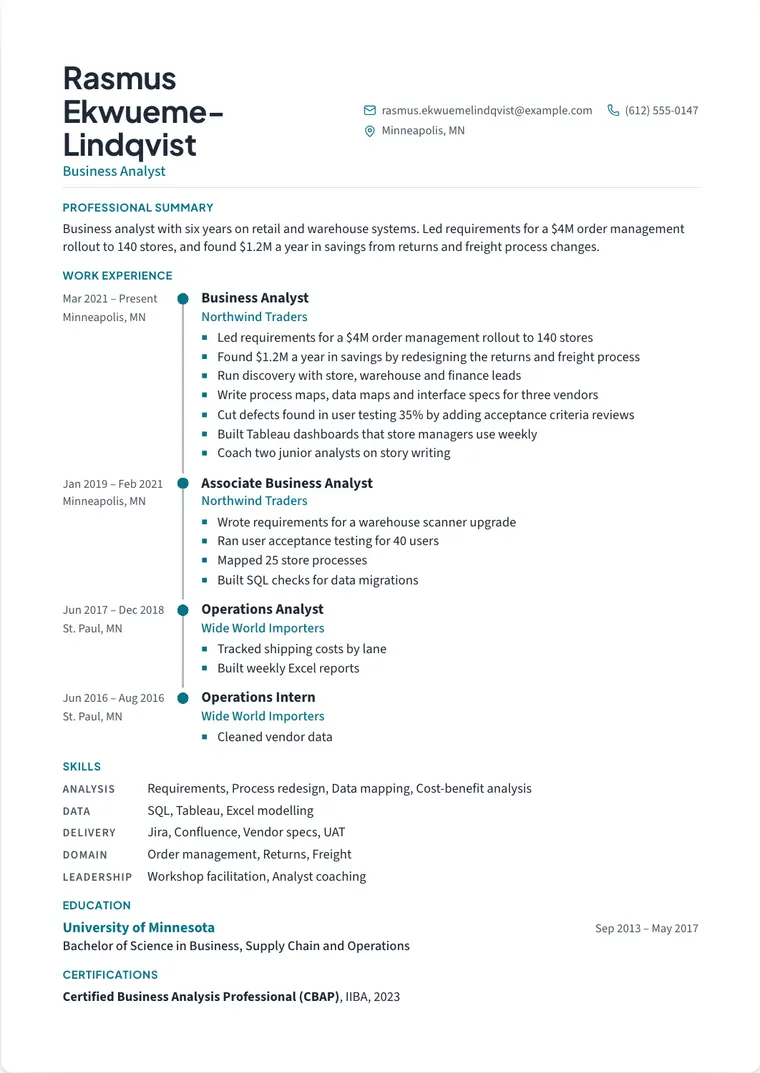
Samples shown in Milestone, the design you picked
How it looks on the page
The business analyst example's certifications, laid out on the page.
Skills shared across these roles
Start here, then add the role-specific skills from its own page. List skills plainly, with no ratings.
- Analysis
- Requirements, Process mapping, Business cases, Forecasting
- Data
- Excel, SQL, Power BI, Tableau
- Delivery
- Planning, Risk logs, Scrum, Stakeholder reporting
- Tools
- Jira, Confluence, MS Project, Smartsheet
Questions
Which example should I start from?
The title closest to the job post, at your experience level. If you're applying one level up, start from that level and keep your real titles. Then swap in your own projects, numbers and tools.
Do I need a certification?
Rarely as a rule, but often in practice for some roles. Most scrum master posts ask for a Scrum certificate, and many IT project posts name the PMP. Analysts and consultants are hired more on results. List one when the post names it or it shows experience you can't show otherwise.
Is an MBA worth it in these roles?
It matters most in consulting, where many firms hire straight from MBA programmes, and for people moving toward management or strategy. Some employers of management analysts prefer an MBA. For analysts, project managers and scrum masters, results and certifications usually count for more.
Which certification fits my stage?
Start with the entry one if you're new: the CAPM for projects, the ECBA for analysis, the CSM or PSM I for Scrum. Move to the PMP, CBAP or A-CSM when you have the experience they ask for. Senior program managers can add PMI's PgMP.
How do I show results from confidential projects?
Give sizes and percentages, and describe the client or system by type, such as "a national retailer" or "a $6M ERP rollout". Don't name clients or figures that aren't public unless your employer allows it.
Agile or waterfall?
Say which you've used, and give a result from each if you can. Many teams use both. Match the order of your bullets to the post: sprints and backlogs for agile roles, plans and stage gates for waterfall or regulated work.
Can I move from operations or support into these roles?
Yes, and many people do. Lead with the analysis, projects and results you already have, add an entry certification, and use an objective that names the role you want.
One page or two?
One page suits most people, and consulting firms expect one even from experienced hires. Program leads, principals and serial founders can use two. Keep recent work in full and shrink older jobs.